
















Home|Depression|Anxiety|Bipolar Disorder|Postnatal Depression

beyondblue: the national depression initiative

Media centre

Media releases

Media contacts

Position statements

Depression and exercise

Pregnancy and antidepressants

Psychological impact of tsunami disaster

Guidelines to the reporting of mental health in the media

Media transcripts

National advertising campaign 2006 resources

Media articles
Home >>Media centre >>Position statements >>Depression and exercise
Media centre
Depression and Exercise

What do we know?
Keeping active can be a great way of helping to manage depression and anxiety.

How do we know this?

  • Research shows that regular physical activity significantly reduces the risk of people developing depression. People who do not take part in physical activity are more likely to have depressive symptoms compared to people who exercised regularly.
  • Regular aerobic and strength-training activities of light or moderate intensity can result in up to a 50 per cent reduction in symptoms of depression and anxiety, especially for women and older people.
  • In older people, exercise has been found to be just as beneficial as antidepressant medication or social contact in the treatment of depression.*
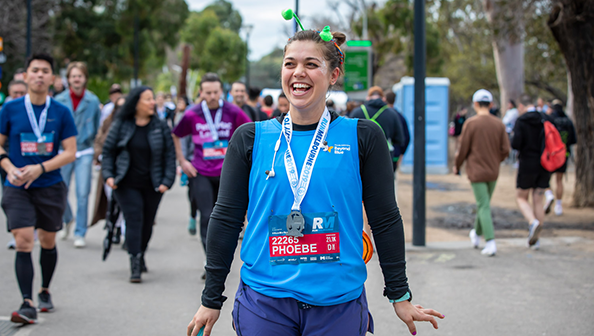
  • The cycle of depression can be broken by participating in pleasurable activities, including keeping fit (riding a bike, jogging, playing football or going for a 20 minute walk).
  • The effects of exercise in those under 20 with mild to moderate depression is not as well researched, but the evidence suggests some benefits.**

How can physical exercise help mental health?

Keeping active can help in a number of ways, including:

- lifting mood
- helping people get a good night's sleep
- helping people feel more energetic and less tired
- blocking negative thoughts and/or distracting people from daily worries
- increasing social contact.

Where to get help

While exercise can help manage depression, often when people become depressed, they often have no energy or motivation. As a result, they often become less active. That is why it can be a good idea to enlist some help. Below is a list of professionals and organisations that can help.

General Practitioner
A doctor who is a General Practitioner (GP) will be able to provide advice and information about depression and exercise. He/she will also be able make a referral to a qualified exercise physiologist. 

Exercise Physiologists
Exercise physiologists are health professionals who have graduated from a certified university course in exercise science and provide services relating to health, fitness and exercise. People who have ongoing health conditions are now able to access services from exercise physiologists at reduced rates.  For more information go to www.medicareaustralia.gov.au 

To find an exercise physiologist near you, see the Australian Association of Exercise and Sports Science's online national database at www.aaess.com.au
Council recreation centres
While each council differs slightly, many offer free or cheap sport and recreational- related facilities such as swimming pools, walking circuits, tennis courts and skating ramps.

Gyms
Like recreation centres, gyms range in their facilities, but often offer a range of classes including aerobics and Pilates as well as having equipment such as rowing and walking machines and swimming pools.

Neighbourhood houses
Neigbourhood houses offer a large range of low-cost group activities, many of which focus on staying active. These may include aerobics, yoga, dancing and walking groups. For information on how to contact your nearest neighbourhood house, contact your local council.

Family and Friends
People with depression often feel like spending less time around people, increasing their sense of isolation and making it harder for them to recover from depression. It's important for people with depression to continue to take part in activities with family and close friends and to accept social invitations, even though they may not feel like it. Planning to do things with other people can also help someone with depression to stay motivated.

Sources 
* Singh N, Clements K, Singh M. The efficacy of exercise as a long-term antidepressant in elderly subjects: a randomized controlled trial. J Gerontol 2001 
** Cochrane Database of Systematic Reviews 2006 Issue 3

For more information about physical exercise and depression as well as some tips on how to keep active, see beyondblue Fact Sheet 8 - Keeping active
For information on the role of Physiotherapists in managing depression, see this article.
Source: Musculoskeletal Physiotherapy Australia (MPA) In Touch magazine, volume 1, 2007, p14-16.


SearchGo

info line: 1300 22 46 36 - Call the beyondblue info line for information and referral to a health professional.  24 hours, local call cost

Click here to find a Doctor or other Mental Health Practitioner

Our ambassadors

Workplace Program
Workplace Program

youthbeyondblue - youth program

Make a secure donation online at ourcommunity.com.au

Find us on Facebook

Other languages

Personal experiences

Bulletin Board

Events diary

Multimedia
Play beyondblue's Bipolar Disorder TV advert

Play beyondblue's Depression in men TV advert

Play beyondblue's Postnatal depression TV advert

Last updated Thursday, 06 December 2007Print this pageEmail this page9,484 page views from 07 May 2007 to 10 Feb 2010
Contact Us|Links|About this Site|Disclaimer|Privacy|Copyright
The information presented on this website is general and not a substitute for professional advice. Refer to the beyondblue Website Terms of Use. The information is current at the time it was published. beyondblue regularly reviews this information. beyondblue expressly disclaims any and all liability for any loss or damage (whether direct, indirect or consequential, including in negligence) suffered or incurred by any person relying on this information including as a result of any omission, inadequacy, insufficiency or inaccuracy in its content.