On this page

Video Transcript
Your faulty smoke alarm
Your stress response is a lot like the smoke alarm in your house.
It’s meant to go off when there’s a genuine threat to you in order to keep you safe. The alarm puts you into action mode – to either fight the fire or flee from the house. It’s this basic response that has helped us survive as humans.
In modern life, we don’t face real threats to our safety that often. But we’ve survived by looking out for threats, so we keep doing it.
Except these days what we’re usually doing is reacting to imagined threats to things we value – like our lifestyle, livelihood or reputation – rather than to real threats to our physical safety. Our big, evolved brains are able to imagine what might potentially harm us in the future, even if it’s pretty unlikely, and just the thought you’re under threat may set your alarm off.
So, your alarm is constantly going off over all sorts of things – whether your boss likes you, whether you made a fool of yourself in that situation, what will happen if you don’t get all this work done, what if something goes wrong tomorrow? These constant false alarms make you feel tense, overwhelmed and exhausted.
The good news is that you can learn to turn off your alarm when you don’t need it on.
The two simple techniques you’re about to learn will help your brain and body understand that there’s no real threat right now. You’re safe and going to be OK. The calming techniques you’re going to look at will: One, help you control your breathing to dial down your stress levels, And two, help you to ground yourself in the present moment where you’re safe
Test
BBW-4119 Notification components layout bugs
Please note: We are currently experiencing technical difficulties with the Before Blue platform. Rest assured, our team are working quickly to get this resolved.
We apologise for any inconvenience this may cause and appreciate your patience during this time.
If you're currently experiencing any issues with registering or logging into the Before Blue, please reach out to support.beforeblue@beyondblue.org.au for our team to promptly assist.
LAMH Womens MH Card 1
Sub text.
Content test 1
Bottom text.

.webp?h=560&iar=0&w=320)
BBW-4343 CTA Split Image
Every two minutes, someone in Australia hits a low point, and reaches out for mental health support.
This June, your donation gets doubled, helping twice as many people with mental health support.
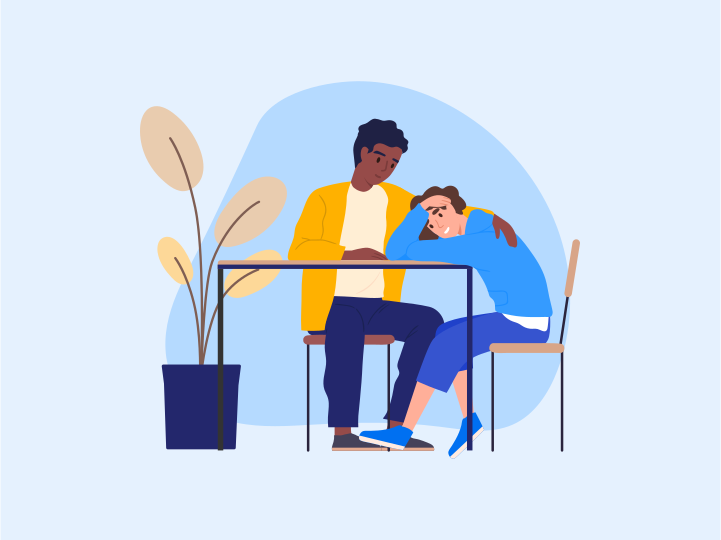
How to tell if someone has poor mental health
Recognising the signs that someone is having mental health issues early can make a big difference.
Here's some practical advice for noticing common signs and symptoms of poor mental health and what to do about it.
BBW-4343 Slimline CTA
Every two minutes, someone in Australia hits a low point, and reaches out for mental health support.

BBW-8409 Slimline CTA test



BBW-4343 Image and Text
Every two minutes, someone in Australia hits a low point, and reaches out for mental health support.
When it comes to mental health, we all have our own unique stories to tell. But no matter what we are going through, there are other people experiencing it too.
Read, watch and listen to stories from everyday Australians about the signs and symptoms they experienced, how they got support, and what they do to stay well now.
Hearing their stories of recovery can help you imagine your own journey.
Taking care of your mental health and wellbeing can look different to everyone. It's about finding a balance in all aspects of your life that works for you. It's about your whole person: physical, mental, social and emotional. Making small adjustments can help you learn what works for you and stay well.
Iframe content loading...

Logo Cloud Item 1
Logo Cloud Description
Header 2 (Optional)



BBW-7887 Dynamic Toggle Test

Test 1 (Icon Card)
Lorem ipsum dolor sit amet, consectetur adipiscing elit. Nunc aliquam elit et felis rutrum, sit amet iaculis elit pulvinar. Aenean finibus ligula vel laoreet congue. Etiam ultrices ligula eleifend tortor interdum dignissim. Curabitur viverra nisl a nisl porta, sit amet malesuada sem pretium. Proin congue dignissim ante quis molestie.